How to Match Discharge Size with Motor Power: 6 Common Data Mistakes in Selecting Compound Cone Crushers
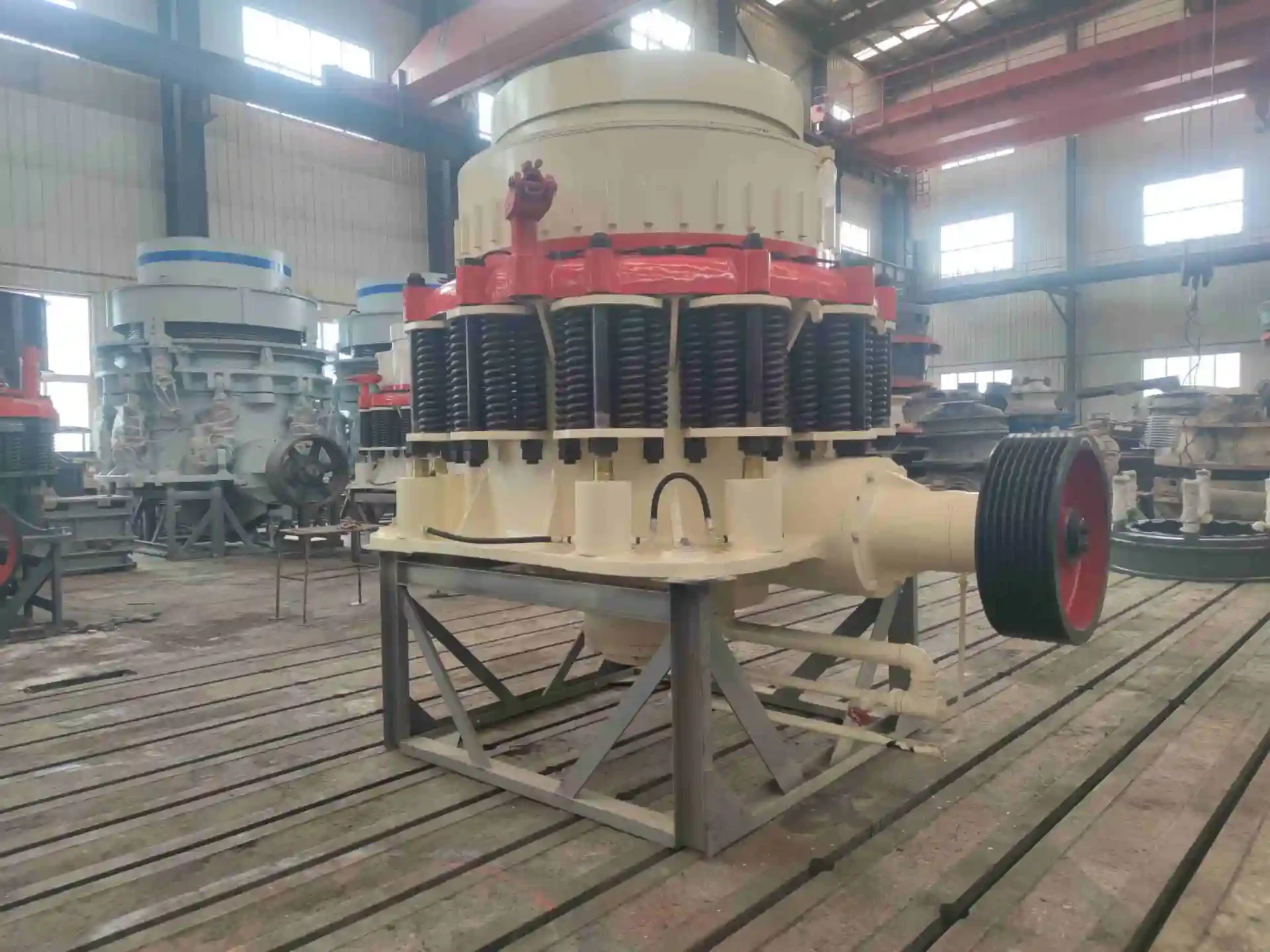
Compound Cone CrusherDisputes over equipment selection rarely stem from the machines themselves. More often, they arise when comparing spec sheets side by side: numbers appear correct, but the metrics are not directly comparable. The discharge size and motor power are two columns most frequently isolated for comparison, yet they are also the most prone to misinterpretation during conversion. Below, we break down six common misconceptions in the order of a practical verification process.
The cutting edge is the closed edge, not the open edge.
The CSS (Closed Side Setting) is the gap between the side liners when the moving cone is closest to the mantles. The same unit also has an OSS (Open Side Setting), which is the gap when the moving cone retracts to its furthest point; the two can differ by more than double. Some parameter tables list the feed opening as OSS, while others list it as CSS. Directly using these two values to calculate the reduction ratio will cause significant errors in particle size prediction for the entire process. The discharge setting varies around the circumference; the nominal value typically corresponds to the minimum gap. After liner wear, the actual discharge setting becomes larger than the nameplate value. Select equipment based on new liners and adjust after commissioning using actual measurements.
Power is input; capacity is output.
Motor power determines the upper limit of available crushing force, not throughput directly. At the same power rating,Standard cavity vs. short-head cavity; thick cavity vs. thin cavityRated throughput can differ by more than a factor of two, as cavity type, eccentricity, and rotational speed jointly determine material residence time and the number of compression cycles in the crushing chamber. Deriving capacity from "power divided by specific energy consumption" is only valid when comparing identical cavity types, discharge settings, and materials. Applying this conversion across different cavity types introduces errors that increase with the reduction ratio.
Reducing the discharge opening size does not automatically result in a finer product.
The discharge setting controls the maximum product size; particle size distribution is primarily determined by the chamber profile. Reducing the setting by one step decreases throughput, increases recirculating load, raises specific power consumption, and simultaneously boosts crushing force. If the feed lacks fines or has high moisture content, reducing the discharge setting can lead to chamber blockage and frequent tramp iron protection trips. For finer products, prioritize adjustments to the chamber profile and reduction ratio; use the discharge setting only for fine-tuning within the allowable range of the selected chamber profile.
Rated capacity conditions are often omitted.
On the parameter table, t/h typically corresponds to open-circuit crushing, specific loose density and moisture content, and medium-hardness materials. In closed-circuit flows, this throughput figure is not the fresh feed rate; circulating loads often exceed the fresh feed itself. Using throughput as final product capacity for investment calculations can lead to a discrepancy of over 30%. For every increase in the Bond Work Index (a measure of ore grindability), throughput at the same discharge setting drops further. Before selecting equipment, obtaining feed gradation analysis and ore hardness data is far more valuable than comparing multiple parameter rows.
There are two hidden discounts on the electrical side.
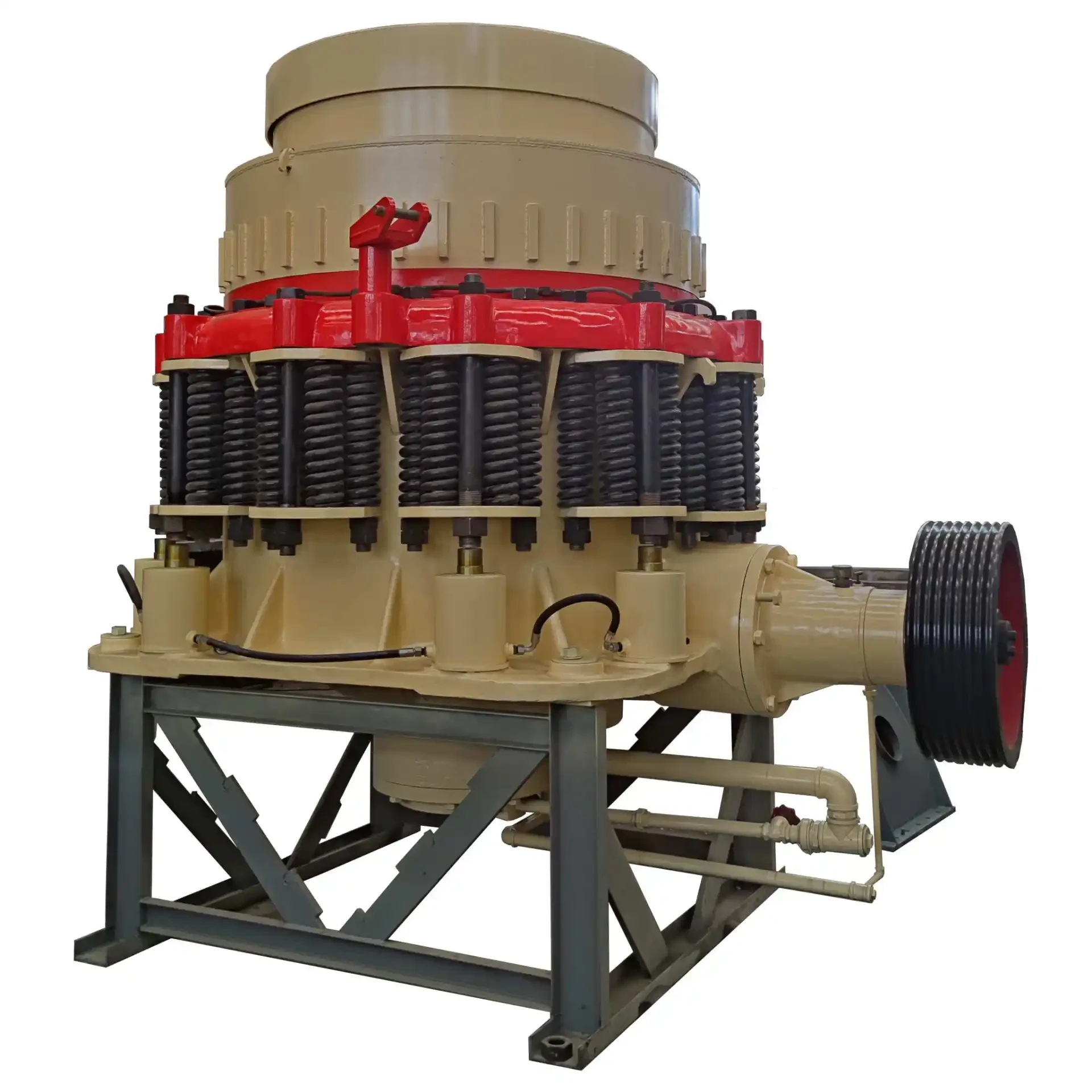
Nameplate power does not equal available shaft power. V-belt drive efficiency is typically around 0.95. Motor service factor, derating above 1000 meters of altitude, and control cabinet temperature relative to ambient conditions all reduce actual output. Sizing based solely on nameplate power can cause equipment to operate continuously above rated current at full load, triggering thermal protection and winding overheating, leading to unplanned downtime. Verification should be based on shaft power, with a safety margin of 10%~15%. This margin accounts for material fluctuations and voltage deviations, not as a means to increase capacity.
A set of executable verification steps
First, determine the final product size distribution and capacity based on new feed, then select the chamber type according to the crushing ratio. Next, choose the discharge setting and corresponding throughput from the manufacturer's chamber table, and verify the motor using shaft power, drive efficiency, and site conditions. After equipment arrival, validate the selection using running current, actual discharge gap measurements, and finished product sieve analysis. If these three parameters do not match the selection table, first check feed gradation and moisture content, then inspect the actual gap after liner wear.
Longxin Heavy Industry is located inCompound Cone CrusherThe configuration stage integrates feed gradation, target particle size distribution, and circulating load into a single process calculation to determine the chamber profile and motor power. Selection aligns ore properties, chamber type, discharge setting, and electrical margins under a unified framework. The largest value in the parameter table does not define the solution.