How 1350mm Feedstock Becomes 1–5 mm Finished Product: Configuration Logic for an Aggregate Line
The output capacity of an aggregate production line is rarely determined by a single machine. To consistently produce 1–5 mm crushed sand from 1350mm granite feed, the process must pass through coarse crushing, medium crushing, fine crushing, screening, and grinding stages. If discharge settings are off at any point, the rated capacity of all downstream equipment will be compromised. Longxin Heavy Industry has been manufacturing heavy-duty equipment since 1993. With over 30 years of experience, we emphasize one principle: define the calculation baseline for the entire process chain before selecting individual machines.
The capacity range must be aligned on the same basis.
Our product line covers a wide capacity range: gyratory crushers 300–5000 t/h, cone crushers 6–2750 t/h, and ball mills 0.65–614 t/h. These figures might suggest that selection is simply about matching output to a machine. In reality, for the same model, discharge settings, cavity types, and rated conditions can cause throughput variations of over 30%.
Two settings must be distinguished for the discharge opening: CSS (Closed Side Setting) and OSS (Open Side Setting). Rated capacity is typically calibrated for open-circuit crushing of medium-hardness material; actual throughput will vary if the material changes or the circuit becomes closed. When a jaw crusher handles primary crushing, feed gradation and feeding continuity also affect throughput. Selection should be adjusted to match actual operating conditions rather than relying solely on peak specifications.
Four-stage crushing and closed-circuit screening
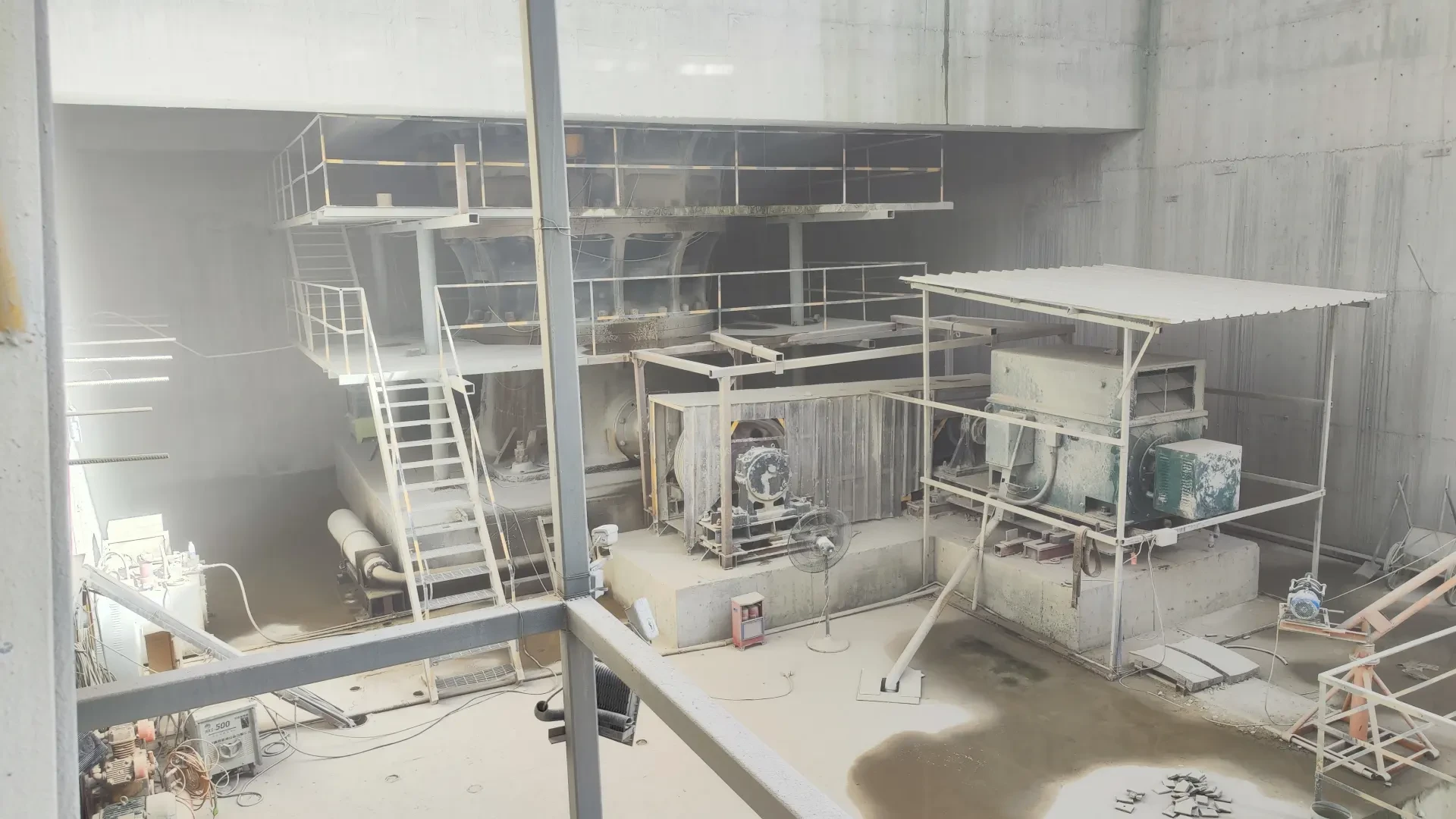
For 1350mm granite feed, we typically configure a four-stage crushing process with screening between stages to produce four aggregate sizes: 0-5mm, 5-10mm, 10-20mm, and 16-31.5mm. Adding more stages increases investment but keeps the reduction ratio in each stage within an optimal range, reducing single-machine load and wear part consumption.
Closed-circuit screening is a key step in this process. Oversized material on the screen returns to the front end, so the crusher only processes material that truly needs crushing. This reduces both over-crushing and oversized finished particles. The aggregate line's design capacity is 17000 t/day—a figure representing the entire configuration, not the rated output of any single crusher.
Crushing ratio determines the chamber design; chamber design determines the final product.
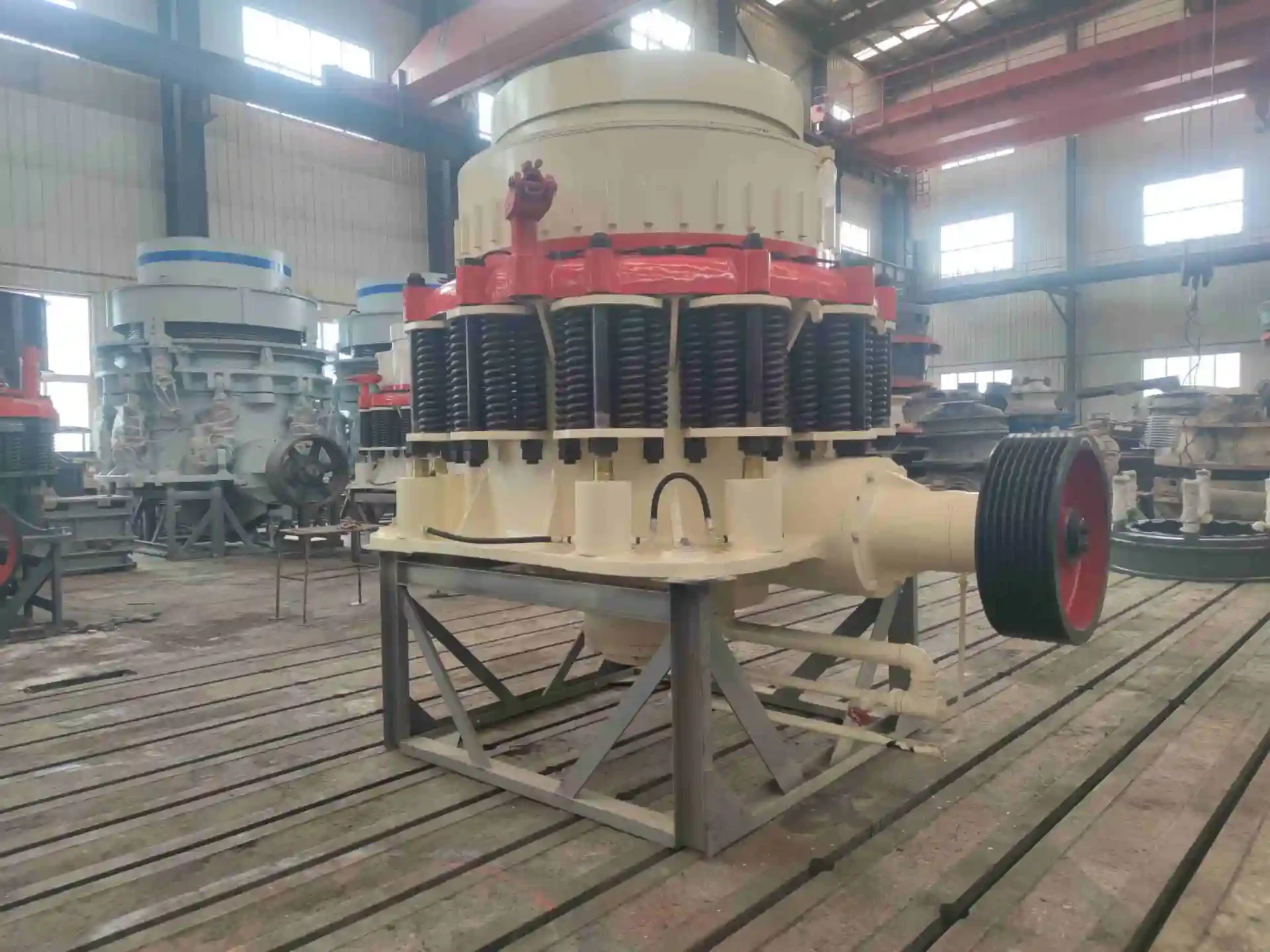
The crushing ratio for a single-stage cone crusher typically ranges from 3 to 8. Exceeding this range requires multi-stage configuration; otherwise, the chamber profile cannot simultaneously optimize throughput and particle shape. Chamber profiles are categorized into standard, medium, and short-head types based on the crushing ratio and feed gradation: use a standard chamber for coarser feeds and a short-head chamber when maximizing fine particle output.
Our cone crushers include the YGP, YHP, YCH, and YHG series, as well as composite models from the PYS, M, and S series, and spring-type models from the PYT series. Each series features distinct cavity profiles and is optimized for specific applications. The circulating load ratio is another key metric to monitor; in aggregate production lines, it typically ranges between 50% and 150%. A higher value indicates insufficient screening efficiency or an overly tight discharge setting.
Power calculation for the grinding section based on the work index
Ball mill selection hinges on the Bond Work Index (Wi), which directly determines mill power and steel ball consumption. The work index is determined through testing; even within the same mining area, values can vary across different sections. When sizing power based on average values, include a safety margin. Our ball mills support capacities from 0.65 to 614 t/h. We also offer rod mills and roller mills; the choice depends on your target particle size and downstream separation process.
For power calibration, reserve 10%-15% of the rated shaft power. In high-altitude areas with thin air and poor heat dissipation, motor derating in high-temperature environments must also be accounted for; otherwise, equipment running continuously will approach full load.
Include site conditions in the proposal.
Device delivery is just the beginning. Harsh winter conditions and long logistics cycles in high-altitude mining regions can significantly increase downtime costs. We operate 15 offices in key global mineral zones. Our standard approach includes regular inspections, scheduled replacement of wear parts based on usage cycles, and proactive stocking of critical spares to keep unplanned downtime within acceptable limits.
A production line's reliability depends on seamless stage transitions, the completeness of screening circuits, reserved power margins, and parts availability when needed. Only by calculating these factors precisely can you determine the answer for the 1350mm to 0-5mm range.