17000 TPD Granite Aggregate Production Line: Analysis of Four-Stage Crushing Equipment Configuration
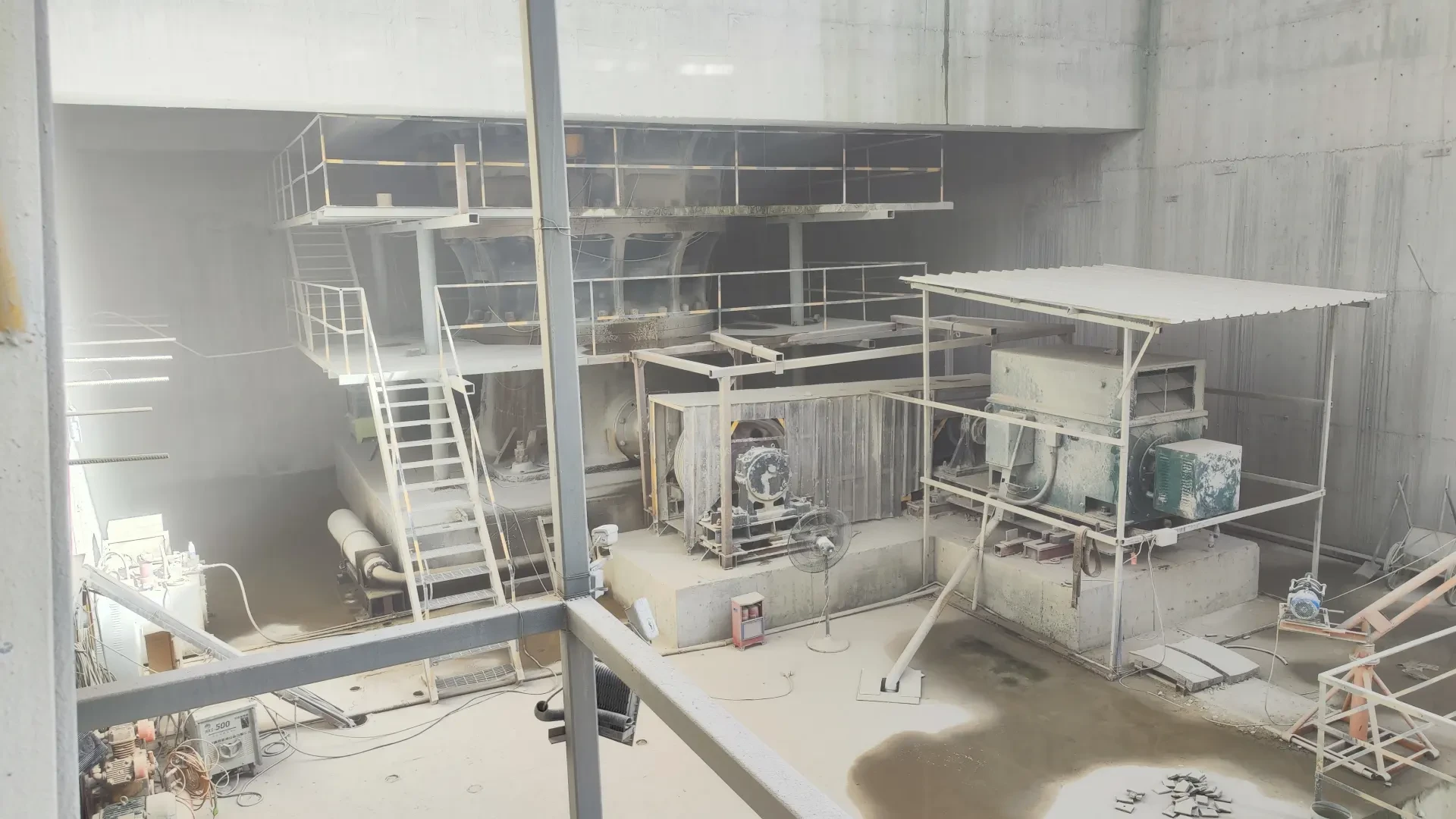
This crushed stone production line in Huizhou, Guangdong, has a design capacity of 17000 tons/day. The raw material is granite with a Mohs hardness of 6-7, and the maximum original ore diameter is 1350 mm. Finished products include four specifications: 0-5 mm sand, 5-10 mm crushed stone, 10-20 mm aggregate, and 16-31.5 mm coarse aggregate. Due to the combination of high hardness, large feed size, and diverse product specifications, crushing must be staged by compression ratio; no single unit can handle the entire task.
One cycle break: digest 1350 mm feed
A configuration of 1 PXZ1600 gyratory crushers with a feed opening of 1600 mm and a maximum feed size under 1350 mm. The discharge setting ranges from 180 to 250 mm, with a capacity of 2400-4500 tons per hour. An approximately 250 mm clearance is maintained between the feed opening and the maximum feed size, allowing continuous feeding of large lumps and ensuring throughput capability in the primary crushing stage.
Double-bore conical section: Accepts 180-250 mm
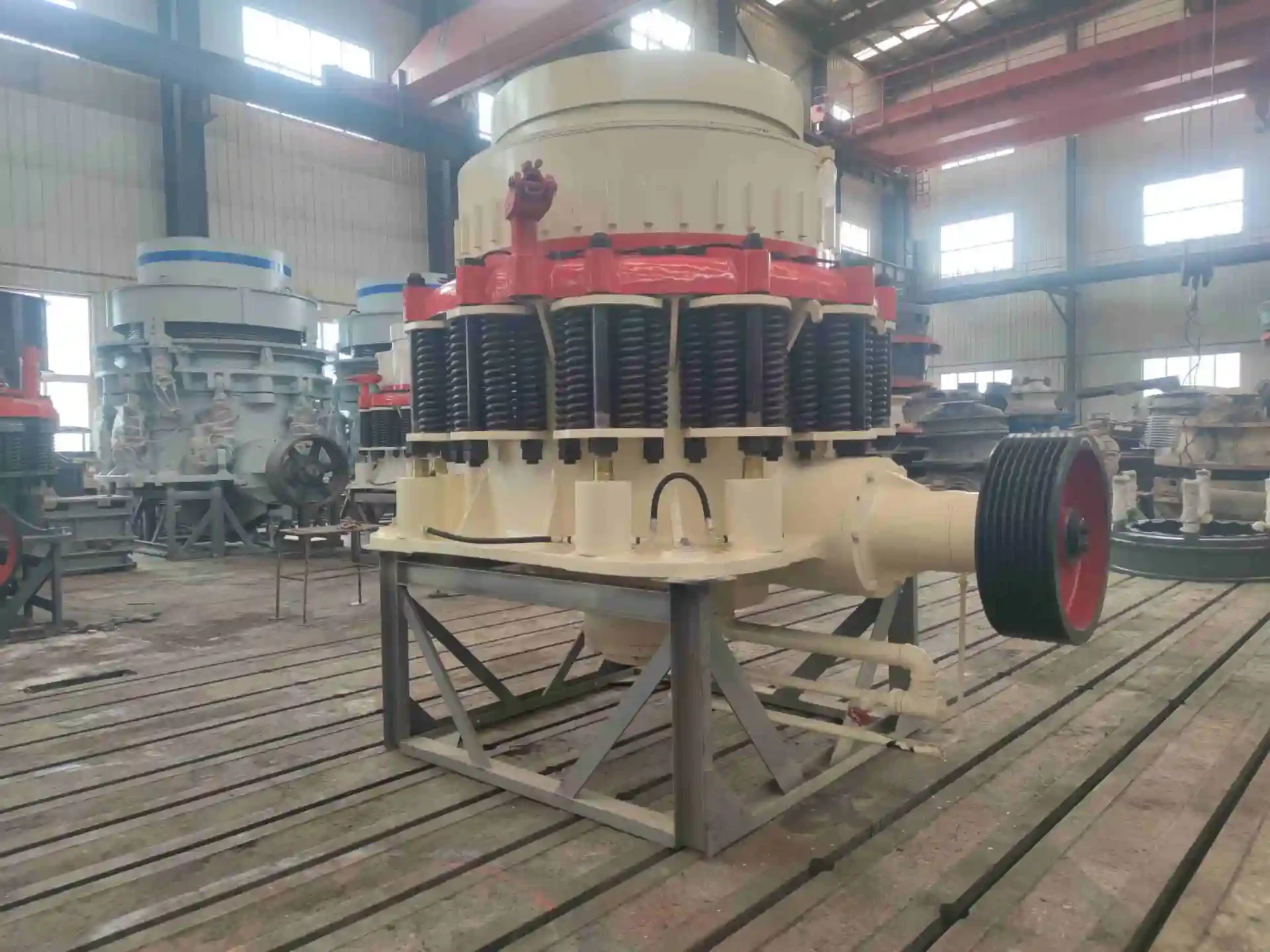
Section 2 configuration: 2 HG710B multi-cylinder hydraulic cone crushers with Standard-Extra Coarse cavity type. The bottom diameter of the moving cone is 8.5 feet (approximately 2590 mm). Motor power: 710 kW. Feed opening size: 445-480 mm. Maximum feed size: < 480 mm. Discharge setting range: 38-64 mm. Single-unit capacity: 1500-2600 tons/hour. This stage further compresses material from Section 1 while providing a stable particle size window for Section 3.
Three medium cavities: particle size enters 25-51 mm
Section 3 uses 3 units of HG710B, standard-medium cavity type, with motor power of 710 kW, feed opening size of 320-350 mm, maximum feed size less than 350 mm, discharge setting range of 25-51 mm, and single-unit throughput of 1050-1900 tons per hour. Sections 2 and 3 use different cavity types of the same machine model, ensuring interchangeable wear parts and spare parts, which reduces the variety of spare parts required for on-site maintenance.
4-stage short-head cone: Controls 13-25 mm
Four sets of HG450D multi-cylinder hydraulic cone crushers configured with short-head coarse type. The moving cone bottom diameter is 7 feet (approximately 2133 mm), and the motor power is 450 kW. Feed opening size: 127-178 mm; maximum feed size: < 178 mm; adjustable discharge setting range: 13-25 mm; single-unit capacity: 500-660 t/h. The short-head cavity features a longer parallel zone, producing more cubical output particles and enabling lower flake content. This section's discharge setting directly determines the proportion of finished aggregate in the 16-31.5 mm size range.
Inter-stage screening and closed-loop return feed
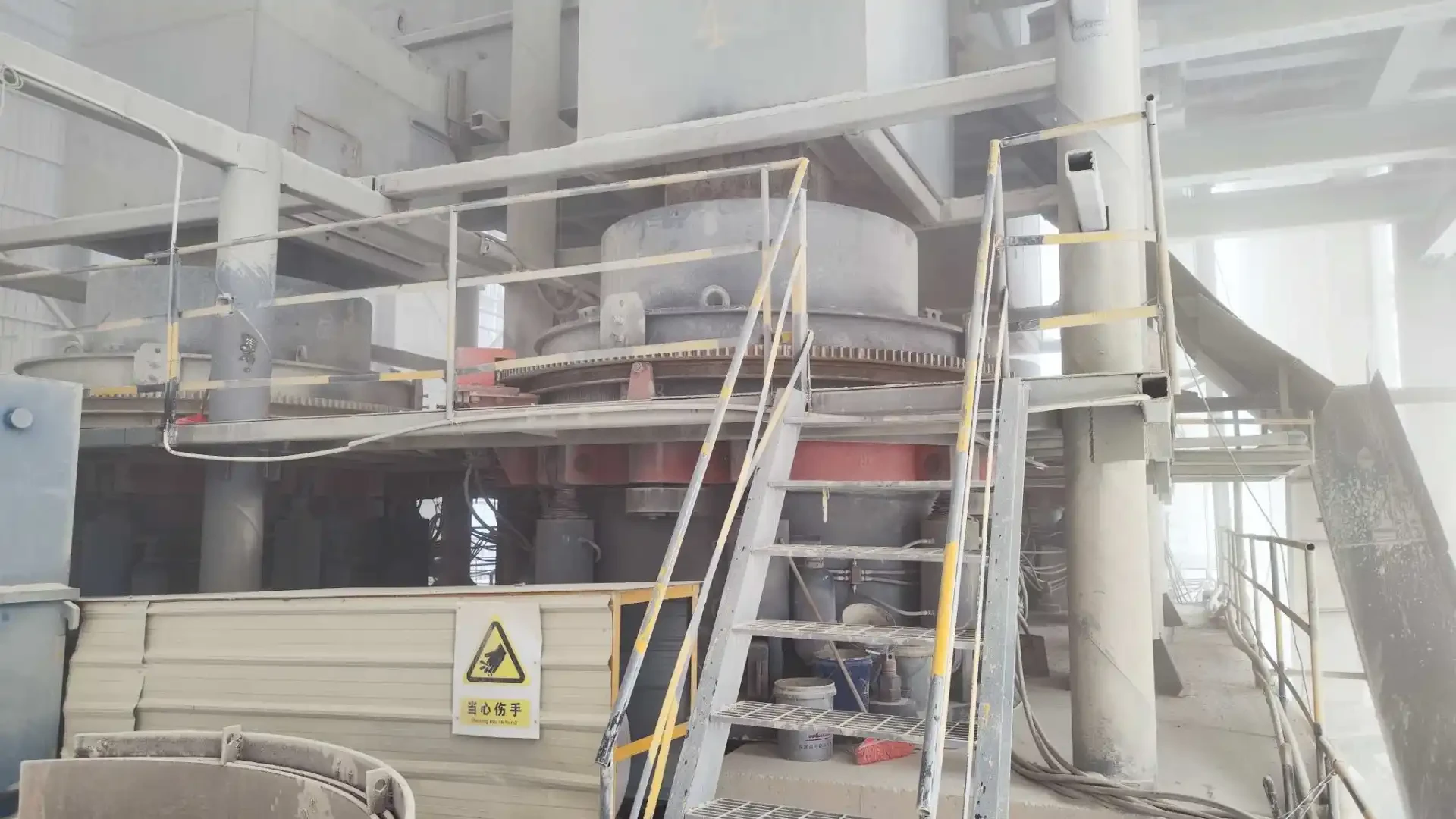
Screening and washing equipment is added between crusher stages to classify the final product. Oversized material is returned in a closed loop to the previous stage. This ensures crushers only process material that truly needs crushing, reducing ineffective cycles and keeping oversized particles and clay out of the finished product bin. Four stable output sizes: 0-5 mm sand, 5-10 mm crushed stone, 10-20 mm crushed stone aggregate, and 16-31.5 mm crushed stone aggregate.
Criteria for four-segment configuration
1 gyratory crushers paired with 9 multi-cylinder hydraulic cone crushers form a four-stage granite aggregate production line with intermediate screening. Primary crushing is evaluated by feed opening and capacity; secondary crushing by chamber type and discharge setting; tertiary crushing by particle shape and closed-circuit load. Each stage has a defined compression ratio, which forms the foundation for overall line efficiency and final product quality. When configuring such lines, we calculate based on material hardness, maximum feed size, target product specifications, and recirculation ratio together—this approach reflects actual throughput more accurately than comparing individual machine parameters in isolation.
Frequently Asked Questions
Q: With a capacity of 17000 tons/day, why is only one gyratory crusher allocated for coarse crushing?
Answer: PXZ1600 has a throughput of 2400-4500 tons/hour. Based on daily operating hours, a single unit meets the coarse crushing demand of 17000 tons/day, with downstream units sharing the load according to their quantity and cavity configuration.
Question: With a Mohs hardness of 6-7, how does granite affect crusher selection for the crushing stage?
Answer: Higher hardness means more energy is required to crush each unit of material, necessitating a finer compression ratio. A four-stage configuration distributes the total compression ratio across four machines, reducing individual unit load and improving control over liner life and discharge particle size.